1. Introduction: The Real Problem Isn’t a Lack of Tools
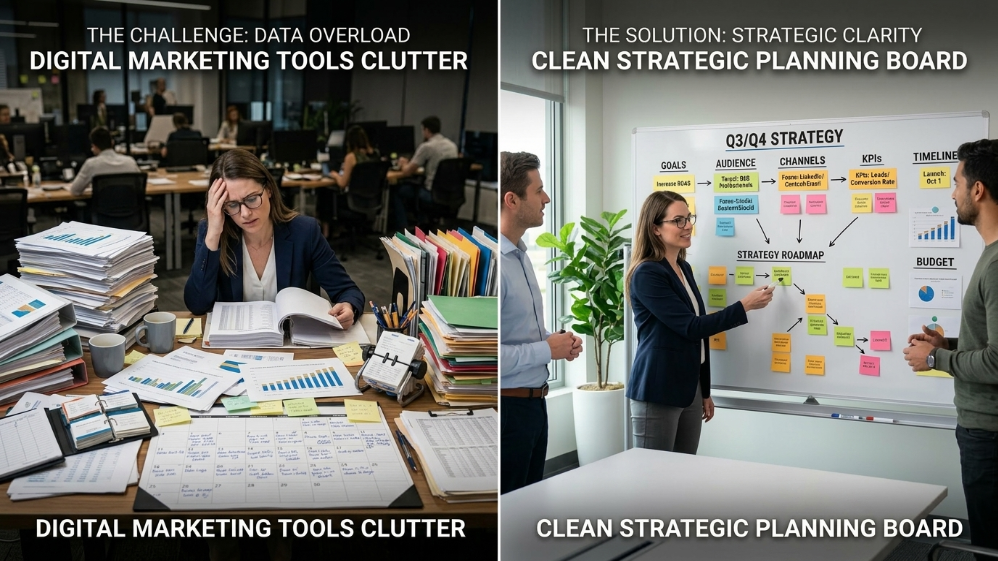
There’s no shortage of platforms, dashboards, or automation software in today’s marketing landscape. If anything, Australian businesses are overwhelmed by choice. Yet despite access to the latest tech, many still struggle to generate consistent results. That disconnect is exactly where the conversation around Why Strategy Beats Tools in Digital Marketing begins.
Most business owners invest heavily in platforms before they’ve clarified their digital marketing strategy. They sign up for SEO tools, ad platforms, analytics dashboards hoping results will follow. But tools don’t create direction; they only execute it. Without a structured online marketing strategy guide, even the most advanced tools become expensive noise.
And here’s the shift that matters: success doesn’t come from having more tools it comes from knowing how and when to use them. That’s the real importance of marketing strategy, and it’s often overlooked.
2. The Tool Obsession Problem in Modern Marketing

Here’s where most businesses get it wrong: they confuse activity with progress.
The rise of SaaS platforms has made marketing tools incredibly accessible. But accessibility has created a new problem over-reliance. The debate around digital marketing tools vs strategy isn’t theoretical; it’s visible in how businesses operate daily.
Companies often:
- Jump between tools without consistency
- Measure vanity metrics instead of meaningful outcomes
- Focus on features instead of results
This tool-first mindset creates a gap. On one side, there’s endless activity campaigns running, reports generated, content published. On the other, there’s a lack of measurable ROI.
Without a clear SEO strategy for business, tools like keyword trackers or analytics platforms don’t drive growth they just collect data. And data without direction doesn’t convert.
3. What a Real Digital Marketing Strategy Actually Means
Let’s clear something up digital marketing strategy isn’t a buzzword. It’s a structured, intentional plan that aligns your business goals with customer behavior and market positioning.
A strong strategy answers three critical questions:
- Who are we targeting?
- What message resonates with them?
- Which channels will deliver that message effectively?
This is where the importance of marketing strategy becomes obvious. Without it, marketing efforts become reactive rather than proactive.
A real SEO strategy for business goes beyond keywords. It includes:
- Content planning based on user intent
- Technical optimisation aligned with search behavior
- Long-term authority building
And importantly, strategy is not static. It evolves with your market, your audience, and your business goals. That’s why relying solely on tools misses the bigger picture they don’t think, adapt, or prioritise.
4. Why Tools Without Strategy Fail (Realistic Scenarios)
And this is exactly why tools alone don’t work.
Let’s look at what happens when businesses skip strategy:
Scenario 1: Running Ads Without a Funnel
A company invests in paid ads using advanced platforms. Traffic increases, but conversions stay low. Why? There’s no structured journey guiding users from click to purchase. This is where a missing online marketing strategy guide becomes costly.
Scenario 2: Using SEO Tools Without a Plan
Another business uses keyword tools daily but publishes random content. Without a clear SEO strategy for business, rankings stagnate. The tool provides insights but not direction.
Scenario 3: Social Media Without Positioning
Content is posted regularly, but engagement remains inconsistent. The issue isn’t the platform it’s the absence of a defined brand message within the digital marketing strategy.
Each scenario highlights the same truth: tools amplify what already exists. If the foundation is weak, tools only scale inefficiency.
5. Strategy First, Tools Second: The Winning Framework
If tools aren’t the starting point, what is?
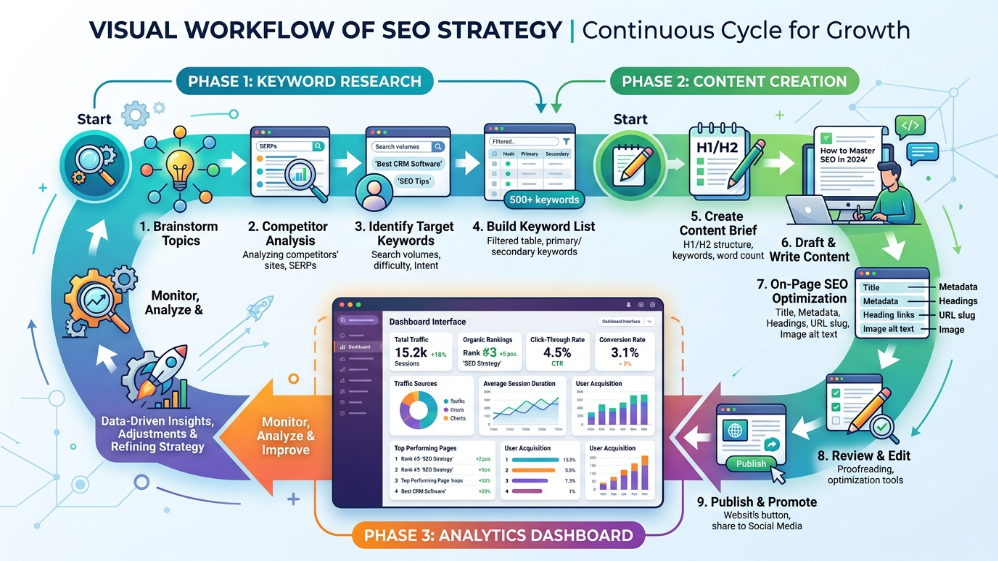
A high-performing digital marketing strategy follows a simple but powerful structure:
Audience → Message → Channel → Tools
This sequence matters.
- Audience: Who are you targeting? What are their pain points?
- Message: What value are you offering? Why should they care?
- Channel: Where does your audience spend time?
- Tools: What platforms help you execute effectively?
This framework is at the core of every effective online marketing strategy guide. It ensures that tools are used with purpose not guesswork.
When businesses reverse this order (starting with tools), they lose clarity. But when strategy leads, tools become powerful enablers.
6. The Role of SEO in a Strategy-Driven Approach
SEO is often misunderstood as a tool-driven activity. In reality, it’s one of the clearest examples of Why Strategy Beats Tools in Digital Marketing.
Effective SEO services for small business don’t begin with software they begin with planning.
A strategic approach to SEO includes:
- Understanding search intent
- Building content clusters
- Creating authority within a niche
- Aligning content with business goals
Tools help execute these tasks, but they don’t define them.
For Australian businesses, investing in SEO services for small business without a clear plan often leads to frustration. Rankings don’t improve, traffic doesn’t convert, and ROI remains unclear.
But when SEO is treated as a long-term digital marketing strategy, the results compound over time consistently and sustainably.
7. Real Business Impact: Strategy vs Tool-Based Marketing
Let’s break this down in practical terms.
Businesses focused on digital marketing tools vs strategy often:
- Chase short-term wins
- Constantly switch platforms
- Struggle with consistency
In contrast, strategy-driven businesses:
- Build predictable lead pipelines
- Improve conversion rates over time
- Create stronger brand positioning

There’s no need to inflate numbers here the difference shows in patterns. Strategy-led marketing creates stability. Tool-led marketing creates volatility.
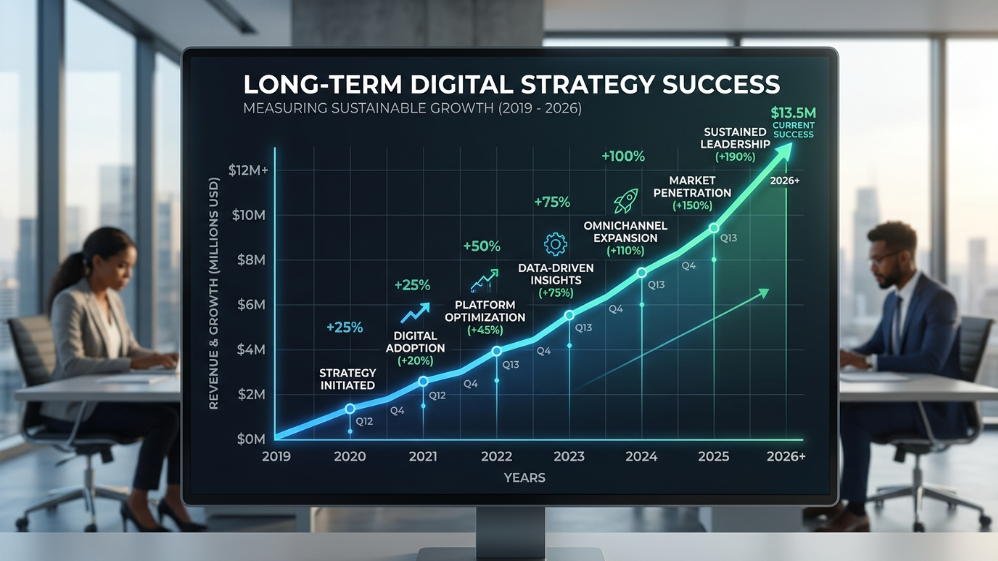
The importance of marketing strategy becomes undeniable when you look at long-term growth. Tools may provide speed, but strategy provides direction and direction is what sustains results.
8. Common Mistakes Businesses Make
Even experienced businesses fall into predictable traps when navigating digital marketing tools vs strategy.
Some of the most common mistakes include:
- Chasing trends instead of building a solid digital marketing strategy
- Investing in too many platforms without clear ROI tracking
- Ignoring the customer journey in favour of quick wins
- Treating SEO as a one-time task instead of an ongoing SEO strategy for business
- Over-relying on automation without understanding audience behavior
These mistakes aren’t about lack of effort they’re about lack of structure.
9. How to Shift from Tools to Strategy (Actionable Steps)
Making the shift isn’t complicated but it does require discipline.
Here’s a practical way forward:
- Audit Your Current Approach
Identify which tools you’re using and why. Are they aligned with your digital marketing strategy, or are they just “nice to have”? - Define Clear Business Goals
Every online marketing strategy guide starts with outcomes. Leads, sales, brand awareness be specific. - Map the Customer Journey
Understand how your audience moves from awareness to decision. This is where the importance of marketing strategy becomes actionable. - Build Strategy Before Execution
Before launching campaigns or investing in tools, outline your approach. What’s the message? Which channels matter? - Use Tools to Support, Not Lead
Tools should enhance execution not dictate it. This mindset shift is at the heart of Why Strategy Beats Tools in Digital Marketing.
10. Conclusion: Strategy Is the Real Competitive Advantage
At the end of the day, tools are easy to access. Strategy isn’t.
That’s why businesses that prioritise thinking over technology consistently outperform those chasing the latest platform. The conversation around Why Strategy Beats Tools in Digital Marketing isn’t about rejecting tools it’s about putting them in the right place.
For Australian businesses aiming for sustainable growth, the focus should shift from “What tool should we use?” to “What’s our strategy?”
Because once the strategy is clear, the right tools become obvious.
And if your business is ready to move beyond scattered efforts and build a results-driven digital marketing strategy, investing in expert-led SEO services for small business can be the turning point.