You’ve probably already read the explainers. You know what a dental marketing agency does. You’ve maybe even diagnosed which problem you’ve got — visibility, conversion, or patient mix. Now you just want to know: what do I actually do, in what order, with what numbers?
This is that post. No “what is dental marketing” preamble — just the exact sequence Perth clinics use to go from invisible to fully booked, channel by channel, with realistic timelines and budgets attached to each step.
Before any channel, sequence, or budget, you need one number: what is a new patient actually worth to your clinic?
Not revenue per visit — lifetime value. A general check-up patient might be worth $400/year. An implant patient might be worth $8,000+ across treatment and maintenance. This number determines how aggressively you should spend on dental clinic marketing and which channels make sense first.
Quick way to estimate it: average treatment value × average visits per year × average years retained. If you don’t know this number, stop here and pull it from your practice management software before reading further — every budget decision below depends on it.
Step 1 — Fix Your Google Business Profile First (Week 1–2)
Before spending a dollar on ads or content, your Google Business Profile (GBP) needs to be right. This is the listing that shows up when someone searches “dentist near me” — and for dental clinic marketing specifically, it’s the highest-leverage, lowest-cost fix available.
What to actually do this week:
- Verify every field is complete — categories, services, attributes, accurate hours
- Upload 15–20 real photos of your clinic, team, and (with consent) results
- Respond to every existing review, including old ones
- Set up a simple system to request reviews from every satisfied patient going forward
Budget: $0–$400 (DIY) or $400–$800/month if managed for you.
Realistic timeline: Visible improvement in map pack visibility within 2–4 weeks.
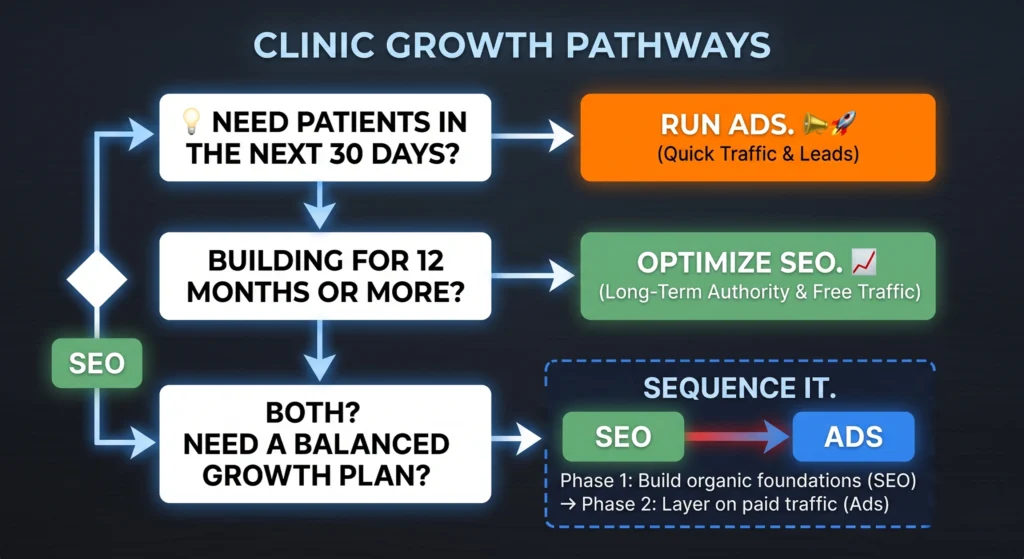
Step 2 — Decide Your Speed: Ads, SEO, or Both (Week 2)
This is the fork in the road for dental marketing Perth. The decision comes down to how urgently you need patients versus how much budget you have for the long game.
If you need patients within 30 days → Google Ads
Run search campaigns targeting high-intent terms specific to your suburb and services — “dental implants Perth cost,” “emergency dentist [suburb],” “dentist near me.” Generic “Perth dentist” campaigns waste budget on browsers; suburb and treatment-specific campaigns convert.
Budget: $2,000–$6,000/month (ad spend + management).
Realistic timeline: First enquiries within days of launch.
If you’re building for the next 12 months → Local SEO for Dentists
This is where local SEO for dentists earns its keep — ranking organically for suburb-specific searches without paying per click, forever. It’s slower to start but compounds, lowering your cost per patient over time.
Budget: $1,500–$3,500/month.
Realistic timeline: 8–12 weeks for initial ranking movement, 4–6 months for strong results.
If you want both — sequence it, don’t run it all blind
Most clinics that get dental clinic marketing right don’t choose one — they run Ads first for immediate cash flow, while SEO builds underneath. Once SEO starts contributing meaningfully (usually month 4–5), Ads budget can often be reduced without losing total patient volume.
Step 3 — Build Landing Pages Before You Send Traffic Anywhere (Week 3–4)
This step gets skipped constantly, and it’s the most common reason dental clinic marketing underperforms. If you’re about to spend money sending people to your website, make sure the page they land on is actually built to convert.
What a converting dental landing page needs:
- A clear, single call-to-action (“Book Your Free Consultation” — not three competing buttons)
- Real before/after photos, not stock images
- Pricing context, even just a starting range — vague pricing kills trust
- A booking form with 4 fields maximum, not 12
Build one dedicated page per high-value service — implants, Invisalign, cosmetic — rather than sending everyone to a generic homepage.
Budget: $500–$1,500 per page (one-time), or included in most agency retainers.
Realistic timeline: Live within 1–2 weeks; conversion impact visible as soon as traffic arrives.
Step 4 — Layer in Reviews and Reputation (Ongoing, Starts Week 1)
This isn’t a “step” so much as a constant — but it’s worth calling out separately because it’s the piece dental clinic marketing campaigns most often treat as an afterthought.
Higher-value patients (implants, cosmetic) research harder before booking. They read reviews. A clinic with 50+ reviews at 4.8 stars consistently out-converts a clinic with 10 reviews — independent of how good either clinic’s ads or SEO are.
What to actually do:
- Set up an automatic review request trigger (text/email) sent 24 hours after a positive visit
- Respond to every review — good and bad — within 48 hours
- Never incentivise reviews directly (against Google’s guidelines) — but make asking effortless
Budget: $0–$300/month for a simple automated tool.
Realistic timeline: Builds steadily; meaningful volume by month 3–4, compounds after that.
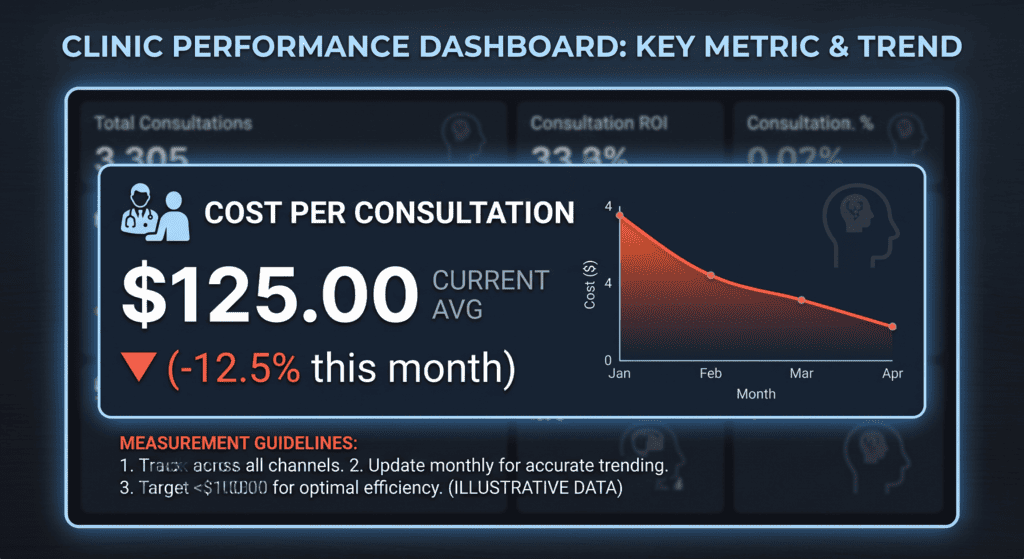
Step 5 — Track the Number That Actually Matters
Not impressions. Not website visits. Cost per booked consultation. Everything above should ladder up to this one number, tracked weekly.
If you’re spending $3,000/month and getting 15 booked consultations, that’s $200 per consultation — compare that against the lifetime value number from the start of this post to know if your dental marketing Perth spend is actually working.
How AIML Digital, a Dental Marketing Agency, Runs This Proven Playbook for Perth Clinics
This sequence isn’t theoretical — it’s how we structure every new dental clinic marketing engagement. GBP and reviews first because they’re fastest and cheapest. Ads or SEO next, sequenced based on your actual urgency and budget, not a generic package. Landing pages before any meaningful traffic spend. And everything tracked against cost per booked consultation, not vanity metrics.
Our average client ROAS across SEO, PPC, and social sits at 6.7× — and it’s this exact sequencing, not any single tactic, that gets clinics there.